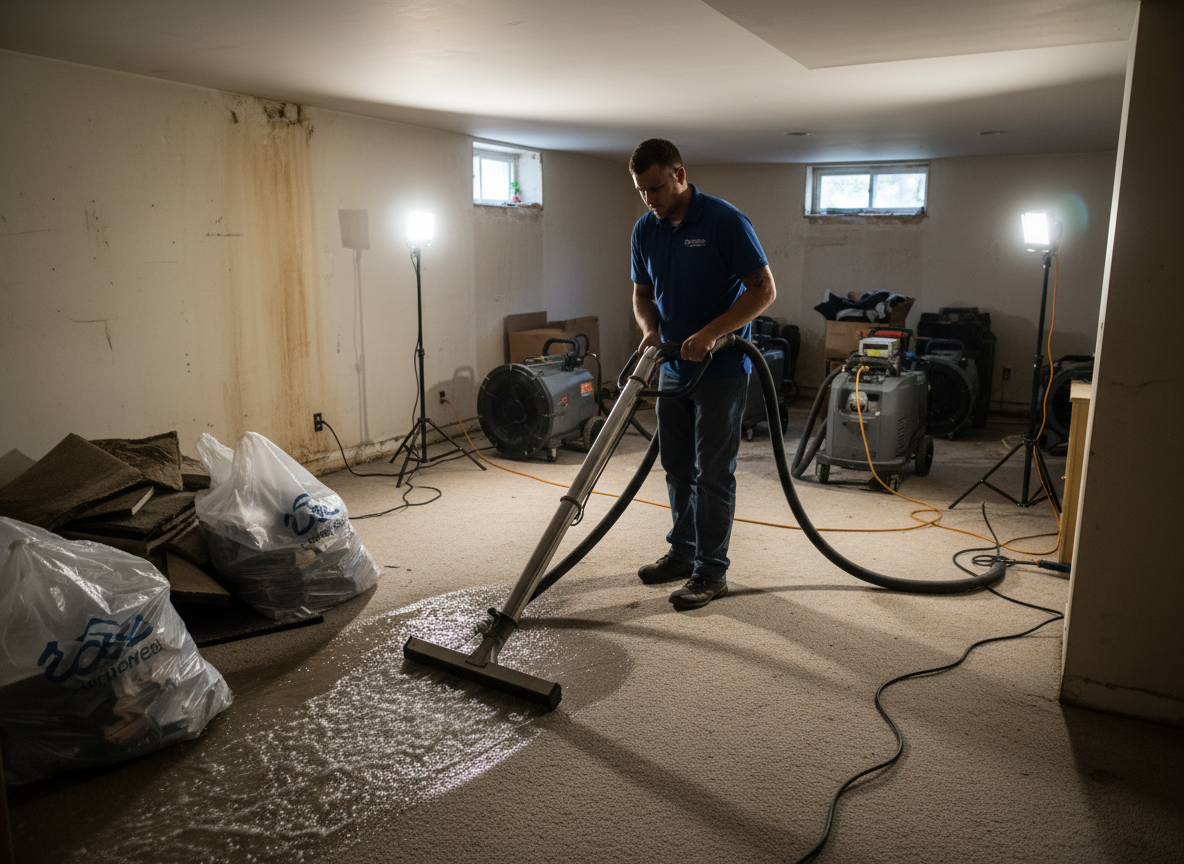
Locust homes often sit on larger lots with crawl spaces or partial basements that collect water after heavy summer rains common in Mecklenburg and Stanly counties. Our crews reach properties along Main Street and near Locust Elementary School quickly via Highway 601, extracting standing water before it reaches slab edges or older HVAC systems typical in 1980s-1990s builds.
We focus on the specific drainage patterns around Locust Community Park and nearby single-family streets where clay-heavy soil holds moisture longer than in denser Charlotte neighborhoods. After removing affected carpet and drywall, we use targeted drying that accounts for the mild winters that can still leave hidden dampness under homes until spring.
Around Locust
We regularly work near:
- 📍Locust Elementary School
- 📍Locust Community Park
- 📍Main Street Locust
- 📍Highway 601
- 📍Locust Town Square
Water Damage Restoration in Locust — Local Notes
- •Crawl spaces under Locust homes built before 2000 frequently trap humidity from the subtropical summers, requiring longer drying times than slab homes in South End.
- •Lots near Highway 601 and Locust Road often have limited side access, so our equipment must be carried through front yards rather than driven around back.
- •Summer thunderstorms dump water faster than local ditches handle, pushing moisture under porches and into garages on properties east of Locust Town Square.
- •Older farm-style homes along secondary roads in Locust commonly have pier-and-beam foundations where water travels along joists before homeowners notice.