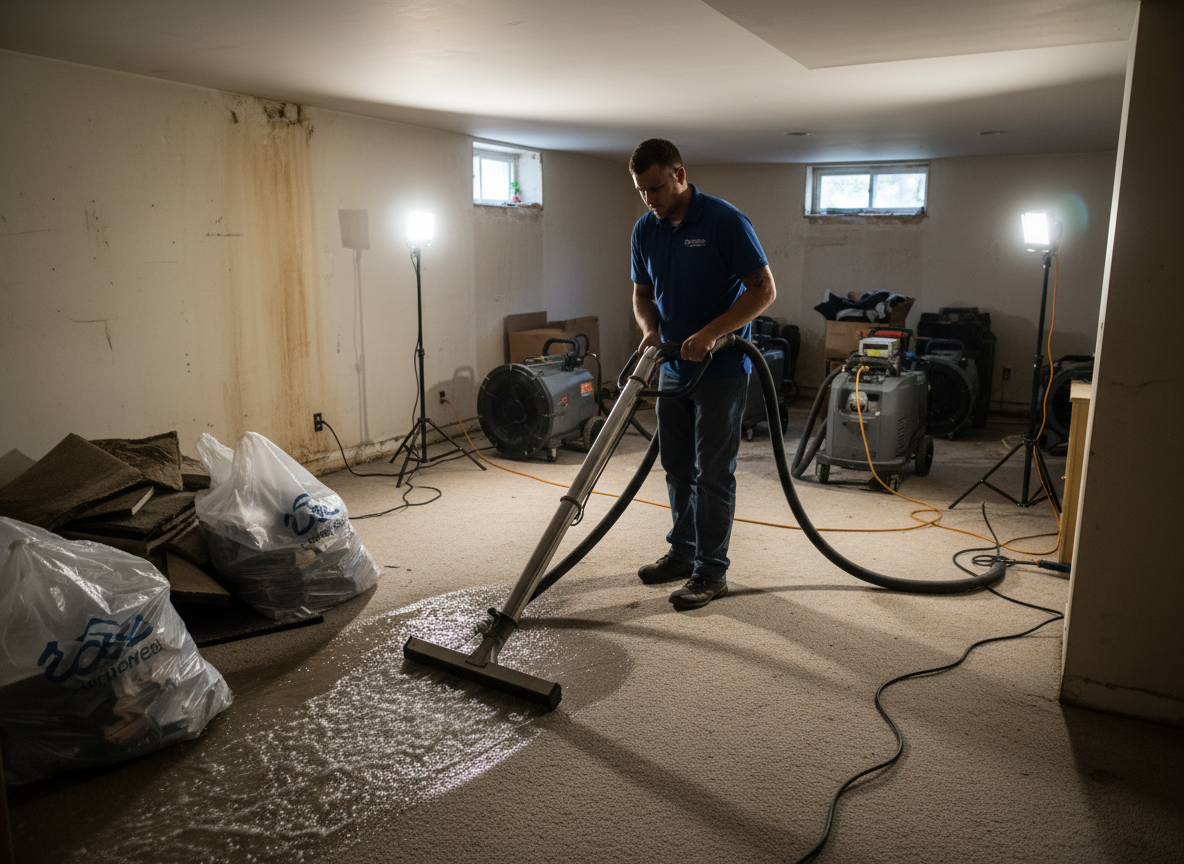
Charlotte's humid subtropical climate brings frequent summer thunderstorms and occasional winter freezes that stress older plumbing in neighborhoods like Dilworth, Elizabeth, and Plaza Midwood. Homes built before 1970 often have cast-iron pipes and slab foundations that hide leaks until water reaches finished floors or drywall. Restoration crews must pull baseboards early and use moisture meters on brick and lath to avoid hidden pockets that later grow mold.
Newer subdivisions in Ballantyne and near Charlotte Motor Speedway sit on clay soils that hold water after heavy rain, pushing moisture into crawl spaces and lower levels. Technicians route dehumidifiers and air movers through these tight spaces while protecting HVAC systems that can spread spores if left running. Work in South End and NoDa lofts adds another layer because exposed brick and concrete require slower drying to prevent cracking.
Mecklenburg County building codes require permits for structural repairs after significant water events, especially when load-bearing walls in Uptown high-rises or historic Myers Park homes are involved. Crews document every step with photos and moisture logs so homeowners can satisfy insurance adjusters without delays. Quick response within the first 24 hours keeps most jobs from escalating to full gut-and-rebuild projects.
Nearby cities like Mint Hill and Stallings share the same storm patterns but often have septic systems that back up during prolonged rain, sending contaminated water into basements. Restoration teams treat these as Category 3 jobs and use containment barriers to protect the rest of the house while removing and disposing of affected materials.
Technician insight
In Charlotte the thing that catches most people out with water damage restoration is how quickly humidity in the summer keeps moisture trapped inside the plaster and brick of older Dilworth and NoDa homes, turning a small leak into hidden mold weeks later if you don't pull the baseboards and run proper drying right away.
Hidden Leak in Dilworth Bungalow
A homeowner noticed soft flooring near the kitchen sink after a week of rain. Inspection found a slow leak in original cast-iron pipes under the slab that had soaked subfloor and joists. Crew extracted water, dried the structure for six days with targeted air movers, replaced damaged sections, and treated for early mold growth before it spread to adjacent rooms.
Water Damage Restoration Services We Offer
✓Emergency Water Extraction
Rapid removal of standing water from basements and crawl spaces in Dilworth and South End homes before it reaches electrical systems or subfloors.
✓Structural Drying
Industrial drying of hardwood floors, drywall, and insulation in older Uptown and Elizabeth properties where humidity slows evaporation.
✓Mold Remediation After Water Damage
Containment and removal of mold growth triggered by leaks in NoDa and Plaza Midwood homes with original plaster walls.
✓Crawl Space Water Removal
Pumping and drying of clay-soil crawl spaces common in Ballantyne and Myers Park after heavy Mecklenburg County storms.
✓Sewage Cleanup
Handling of contaminated water from backed-up lines in Mint Hill and Stallings properties where septic systems are still in use.
✓Document and Contents Drying
Freeze-drying and cleaning of books, photos, and furniture from flood-affected homes near Freedom Park and the Bechtler Museum area.
Water Damage Restoration Cost in Charlotte, NC
| Service | Typical Range | What Affects It |
|---|---|---|
| Water Extraction | $600–$2,200 | Higher in older Uptown and Dilworth homes with multiple levels or finished basements. |
| Structural Drying | $800–$3,500 | Extends in humid summer months or when clay soil keeps crawl spaces damp in Ballantyne. |
| Mold Remediation | $1,200–$4,000 | Varies with square footage and whether plaster walls in Elizabeth or Myers Park must be opened. |
| Crawl Space Drying | $500–$1,800 | Lower when access is clear; higher near Stallings if septic backup requires extra containment. |
Ranges are typical for Charlotte, NC and confirmed with an exact written quote before any work starts.
How it works
- 1
On-Site Assessment
Technician inspects affected rooms, measures moisture in walls and floors, and identifies the water source in the specific Charlotte neighborhood.
- 2
Water Extraction
Pumps and vacuums remove standing water while protecting hardwood, carpet, and electrical outlets typical in older Mecklenburg homes.
- 3
Drying And Dehumidification
Air movers and dehumidifiers run until moisture readings return to normal, accounting for Charlotte's high summer humidity.
- 4
Cleaning And Sanitizing
Antimicrobial treatments clean surfaces and prevent mold in areas like NoDa lofts with exposed brick.
- 5
Restoration And Repairs
Replace damaged drywall, flooring, and trim so the home matches pre-loss condition while meeting local code requirements.
Pricing
Upfront quotes given after inspection; final cost depends on square footage, water category, and whether older materials like plaster or hardwood are involved.