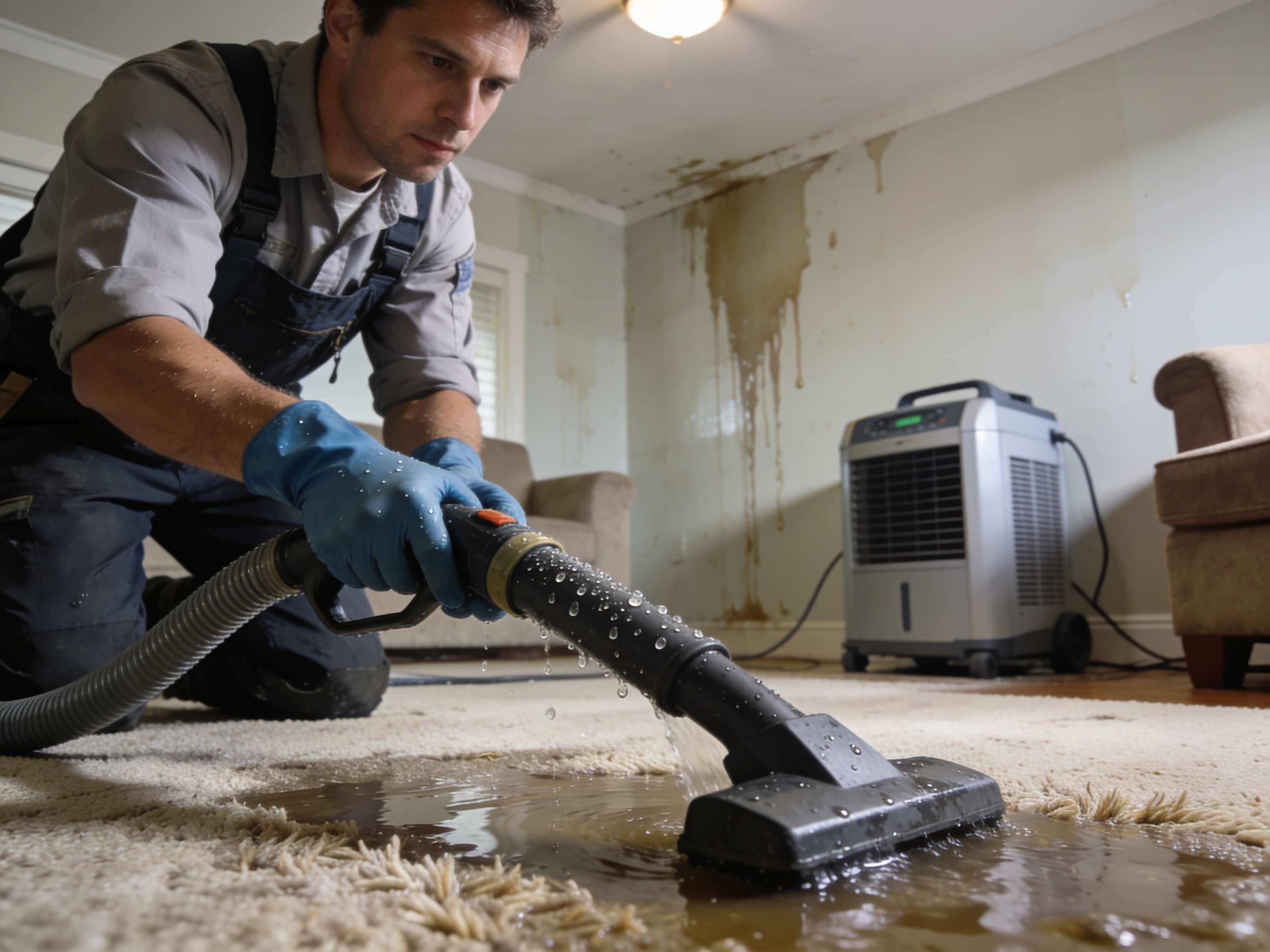
Charlotte's humid subtropical climate means standing water in a crawlspace or basement can turn into active mold growth within 48 hours during summer months. Older brick homes in Dilworth and Elizabeth often have limestone foundations and limited vapor barriers, so moisture travels upward into hardwood floors and plaster walls faster than in newer Ballantyne construction. We extract with truck-mounted units rated for 200+ gallons per minute and follow with industrial dehumidifiers sized for the square footage and humidity load typical of Mecklenburg summers.
After major rain events, stormwater often backs up along the low-lying terrain near Freedom Park and the South End rail corridor. Finished basements in Plaza Midwood and NoDa row homes frequently take on water through window wells and foundation cracks that have widened over decades. Our crews document every affected material layer before removal so homeowners have clear records for insurance adjusters working Mecklenburg County claims.
We place drying equipment based on actual moisture meter readings rather than blanket assumptions, because post-war homes in Myers Park have plaster over wood lath that holds hidden moisture behind baseboards. In Mint Hill and Stallings properties with slab-on-grade construction, we check under vinyl and tile for trapped water that can migrate into adjacent rooms. All equipment is removed only after readings return to the 10-12 percent range consistent with Charlotte's ambient conditions.
Technician insight
In Charlotte the thing that catches most people out with Water Damage Cleanup is how quickly humidity in the 70-80 percent range during July and August drives mold behind baseboards in 1920s-1940s homes in Dilworth and Elizabeth; we have to pull trim and check plaster that newer Ballantyne slabs never have.
South End row home after heavy rain
Water entered a finished basement through a window well during a summer storm. We extracted 400 gallons, found moisture had wicked into the subfloor under LVP, and ran drying equipment for four days until readings stabilized. Homeowner avoided mold growth and kept the original flooring in adjacent rooms.
Water Damage Cleanup Services We Offer
✓Emergency Water Extraction
Rapid removal of standing water from basements and crawlspaces in Uptown Charlotte and South End using high-volume truck-mounted pumps to stop further structural saturation.
✓Structural Drying and Dehumidification
Placement of commercial air movers and dehumidifiers calibrated for Mecklenburg County's summer humidity to dry framing, subfloors and plaster in older Dilworth and Elizabeth homes.
✓Crawlspace Water Cleanup
Pumping and drying of flooded crawlspaces common in NoDa and Plaza Midwood bungalows where poor drainage and clay soils trap moisture against foundation walls.
✓Carpet and Pad Removal
Cutting and disposal of saturated carpet and padding in Ballantyne and Myers Park residences to prevent hidden mold growth under flooring.
✓Content Drying and Moving
Safe removal and drying of furniture and belongings from water-affected rooms in Spectrum Center area apartments and Bank of America Stadium vicinity condos.
Water Damage Cleanup Cost in Charlotte, NC
| Service | Typical Range | What Affects It |
|---|---|---|
| Initial water extraction visit | $450–$950 | Higher for multi-story homes or when access is limited in older Uptown buildings. |
| Daily drying equipment rental | $175–$350 per day | Depends on number of units needed for humidity load in summer months. |
| Crawlspace drying package | $800–$1,600 | Includes extraction plus extended dehumidification for clay-soil properties. |
| Carpet and pad disposal | $250–$500 | Varies by room count and disposal fees in Mecklenburg County. |
Ranges are typical for Charlotte, NC and confirmed with an exact written quote before any work starts.
How it works
- 1
Arrival And Assessment
Technician arrives at the Charlotte address, locates the water source, and maps moisture levels room by room with meters.
- 2
Water Removal
Standing water is extracted using pumps and wands sized for the volume present in the specific neighborhood property type.
- 3
Drying Setup
Air movers and dehumidifiers are positioned according to meter readings and Charlotte humidity data.
- 4
Daily Monitoring
Return visits track moisture reduction until materials reach acceptable dry standards for the local climate.
- 5
Final Documentation
Readings and photos are compiled for the homeowner and insurance records before equipment removal.
Pricing
Pricing varies by water volume, affected square footage, and how many days drying equipment must remain on site in Charlotte humidity.