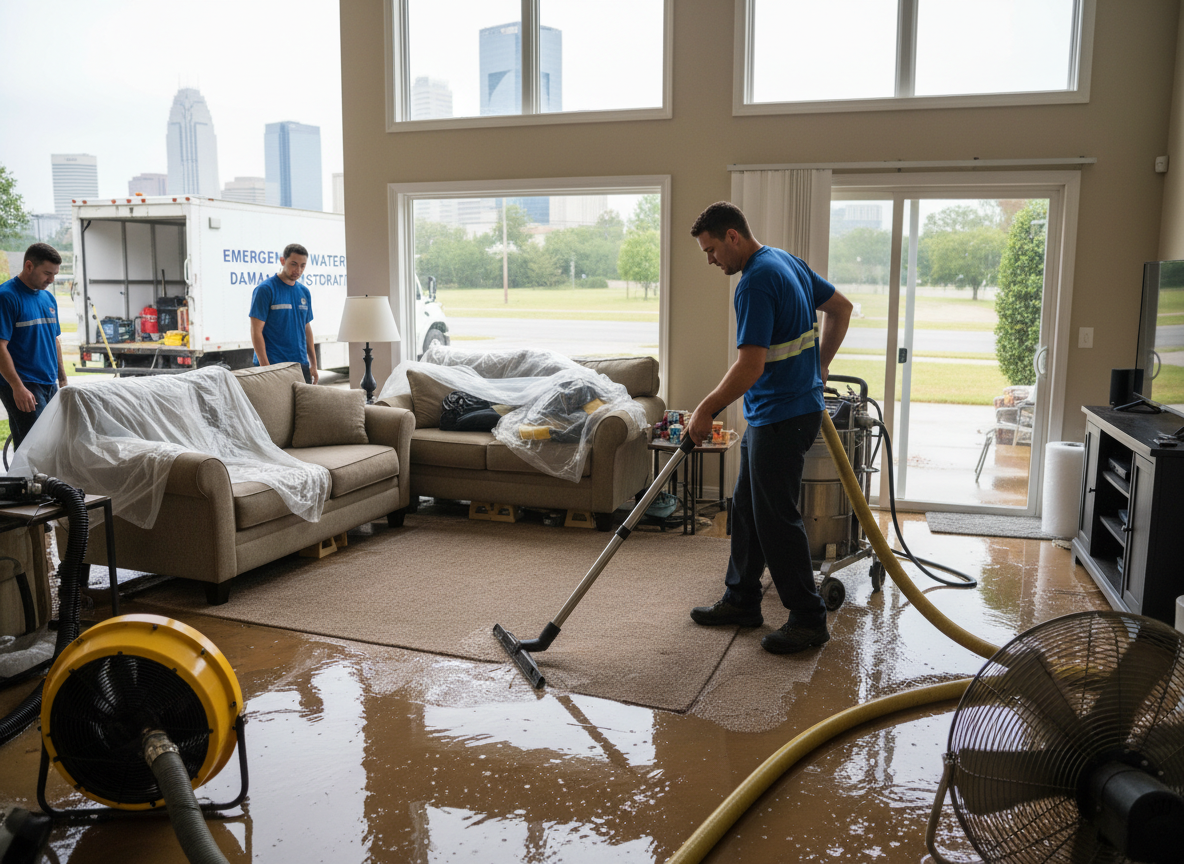
Charlotte's humid subtropical climate brings heavy summer downpours that overwhelm older brick and frame homes in Dilworth and Plaza Midwood. Water quickly migrates under hardwood floors and into plaster walls, creating hidden pockets that standard fans miss. Crews arriving from our base at 407 3rd St focus on moisture mapping with meters to locate saturation behind lathe and plaster before mold sets in during the mild winter months.
Newer construction in Ballantyne and South End often features slab-on-grade foundations with finished basements. When supply lines burst or sump pumps fail, water travels under vinyl plank and into HVAC returns, spreading through the entire duct system. Extraction must include negative air machines and antimicrobial rinses on porous materials to meet Mecklenburg County building standards for re-occupancy after any event.
Storm runoff from nearby Mint Hill and Stallings frequently backs up into low-lying yards in Elizabeth and NoDa. Clay-heavy soils slow natural drainage, forcing water against foundation walls for days. Technicians use subfloor drying systems and targeted dehumidification calibrated for 80-plus percent humidity to prevent warping in historic trim and cabinetry common in these neighborhoods.
Freedom Park and areas around Bank of America Stadium see occasional sewer line issues during peak rainfall. Sewage intrusion requires full containment and disposal protocols before any drying begins. Homeowners in these zones benefit from immediate board-up and content removal to protect items from secondary damage while work proceeds under the city's permitting rules.
Technician insight
In Charlotte, the thing that catches most people out with Emergency Water Damage Restoration is how quickly humidity in the crawl spaces of older Dilworth and Plaza Midwood homes turns a small leak into widespread mold once summer rains hit the clay soil.
NoDa Row Home After Summer Storm
Heavy rain backed water into the finished basement of a 1920s row home near the Bechtler Museum. We found saturation under the subfloor and in the HVAC return. Extraction and targeted drying prevented mold growth; the family returned within five days with no lingering odors.
Emergency Water Damage Restoration Services We Offer
✓Burst Pipe Water Extraction
Rapid removal of standing water from supply line failures in Uptown high-rises and Dilworth row homes before it reaches electrical systems or shared walls.
✓Storm Flood Cleanup
Extraction and drying after heavy rains affect yards and crawl spaces in South End and NoDa, including debris removal from nearby Charlotte Motor Speedway runoff channels.
✓Sewage Backup Remediation
Containment, removal and disinfection of contaminated water from municipal line backups common in older Elizabeth and Plaza Midwood properties.
✓Crawl Space Drying
Targeted moisture removal and vapor barrier installation under homes in Ballantyne and Myers Park where clay soils trap humidity year-round.
✓Ceiling and Wall Cavity Drying
Injection drying and antimicrobial treatment for water that travels through plaster and drywall in historic NoDa and Dilworth structures.
Emergency Water Damage Restoration Cost in Charlotte, NC
| Service | Typical Range | What Affects It |
|---|---|---|
| Initial Assessment And Extraction | $250–$600 | Higher in multi-story Uptown buildings with limited access. |
| Crawl Space Drying | $800–$1,800 | Varies with soil moisture in Ballantyne and Mint Hill properties. |
| Full Room Drying Package | $1,200–$2,500 | Includes equipment for plaster walls in Dilworth and Elizabeth homes. |
| Sewage Containment And Cleanup | $1,500–$3,000 | Depends on affected square footage and disposal needs. |
Ranges are typical for Charlotte, NC and confirmed with an exact written quote before any work starts.
How it works
- 1
On-Site Assessment
Technician arrives from 407 3rd St, maps moisture with meters, and identifies affected materials in the specific neighborhood.
- 2
Water Removal
Pumps and extractors pull standing water while protecting electrical and HVAC systems common in Charlotte homes.
- 3
Drying And Dehumidification
Industrial equipment runs calibrated for local humidity levels until readings return to normal on all surfaces.
- 4
Final Verification
Post-drying inspection confirms no hidden moisture remains before any reconstruction begins.
Pricing
Upfront quotes after inspection; final cost depends on water volume, materials affected, and access in older versus newer Charlotte homes.