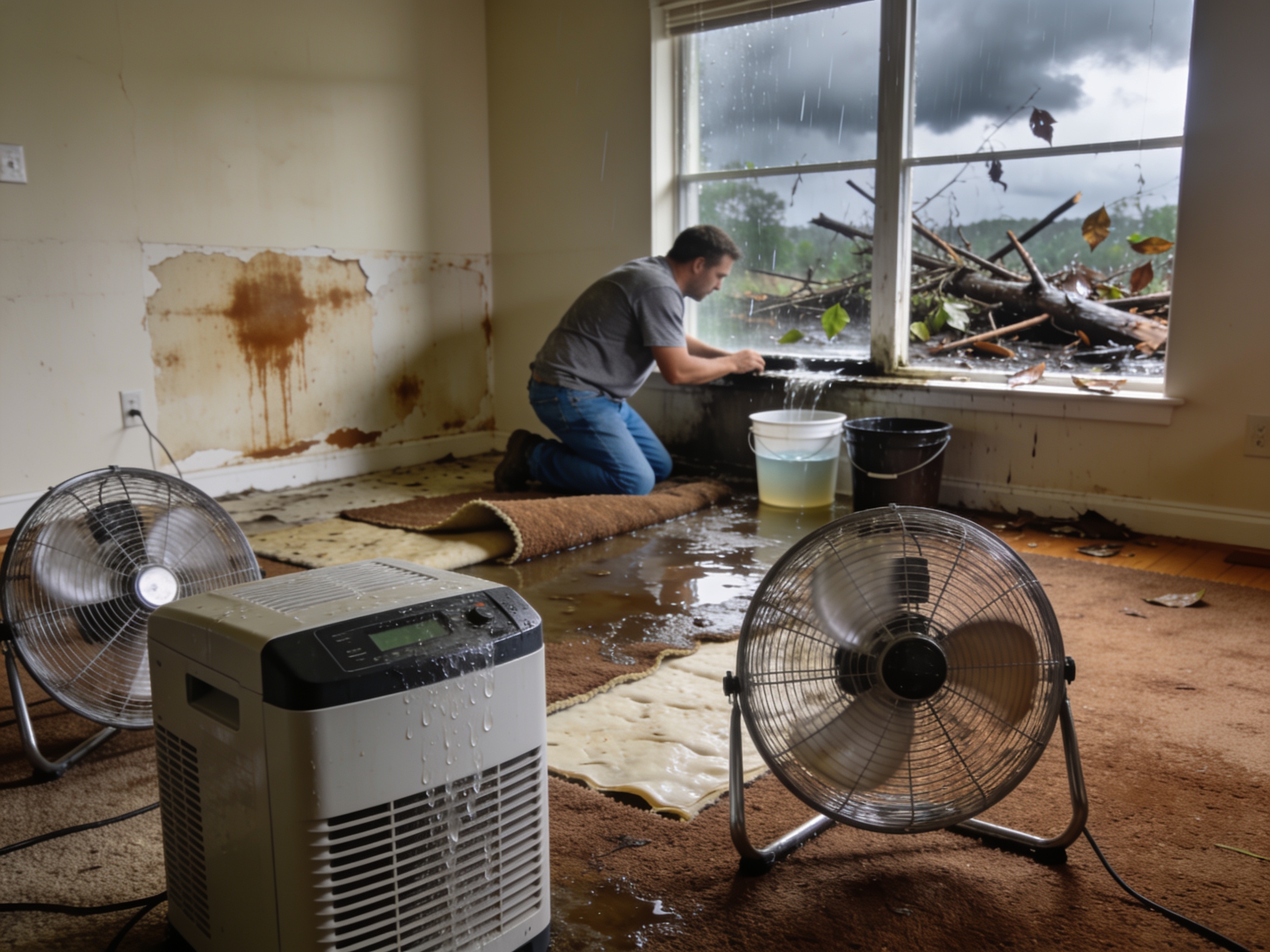
Cornelius sits along the southern shore of Lake Norman in northern Mecklenburg County, where sudden summer thunderstorms and lake-level fluctuations regularly push water into crawl spaces and garages. Homes along Catawba Avenue and in the older sections near Main Street often feature slab foundations or pier-and-beam construction from the 1980s and 1990s that trap moisture after heavy rains. Our team leaves Uptown Charlotte on I-77 and reaches most Cornelius addresses within 35 minutes, bringing extraction equipment sized for lakefront lots that can have limited turnaround space.
We focus on properties near Jetton Park and Bailey Road Park where dense tree cover and clay-heavy soil slow natural drainage. After storms, standing water frequently collects against foundation walls on narrow driveways off Highway 115. Technicians map moisture with infrared cameras before removing carpet pads or opening walls, then use air movers positioned to avoid disturbing lake views or neighbor fences common in these neighborhoods.
Mint Hill and Stallings clients sometimes ask about Cornelius jobs because the same weather cell can hit both sides of the county. We treat each Cornelius call with the same extraction and drying protocol used closer to the lake, adjusting for the higher humidity that lingers longer here than in more inland parts of Charlotte.
Around Cornelius
We regularly work near:
- 📍Jetton Park
- 📍Bailey Road Park
- 📍Catawba Avenue
- 📍Cornelius Town Hall
- 📍Cornelius Elementary School
- 📍Ramsey Creek Park
Water Damage Restoration in Cornelius — Local Notes
- •Lakefront homes off Jetton Road often have finished basements or lower-level bonus rooms that require perimeter drainage checks after lake-level rises.
- •Narrow driveways common on streets like Washam Potts Road limit the size of dehumidifiers we can position without blocking access for residents.
- •Clay soils around Cornelius Elementary and nearby subdivisions hold water longer, so we extend drying times and place additional moisture sensors under slabs.
- •Summer humidity combined with mild winters means hidden leaks in older plumbing along Main Street can go unnoticed until drywall softens during the next rain event.