2026-11-06 · David Harlan
Protecting Older Homes In Dilworth And Myers Park From Pipe-Burst Damage
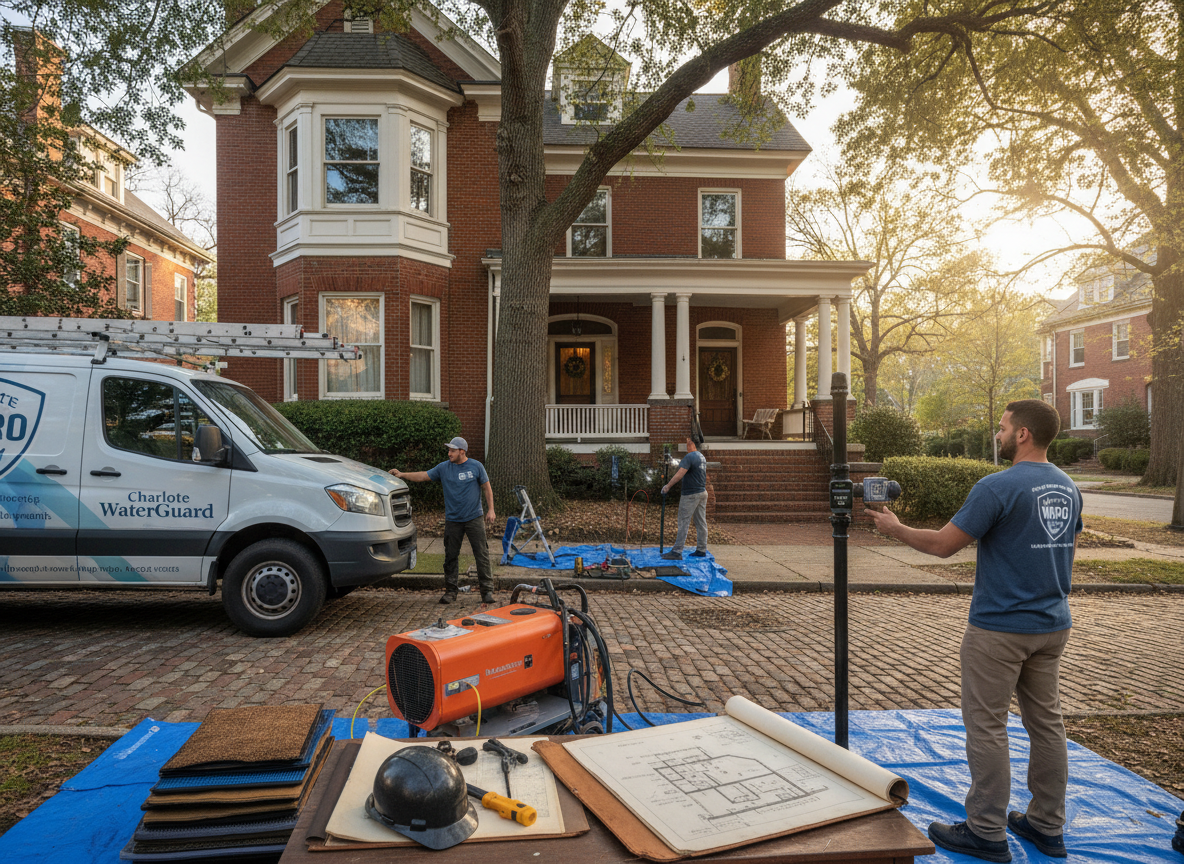
Older homes in Dilworth and Myers Park often experience pipe bursts when galvanized steel supply lines installed before 1950 reach the end of their 40- to 60-year service life and encounter even brief temperature drops below freezing. Homeowners can reduce this risk by replacing vulnerable sections with copper or PEX, insulating exposed runs in crawl spaces and attics, and maintaining indoor temperatures above 55°F during winter cold fronts that reach Mecklenburg County every few years.
Plumbing Vulnerabilities in Pre-1950 Dilworth and Myers Park Homes
Dilworth and Myers Park contain many Craftsman and Colonial Revival houses constructed between 1910 and 1940 whose original galvanized steel pipes now show interior rust buildup that narrows flow and creates weak spots. These neighborhoods sit on gently rolling terrain typical of central Mecklenburg County, so basement and crawl-space pipes sit closer to cooler soil temperatures than newer slab-on-grade construction in Ballantyne or South End. When a rare winter night pushes lows into the teens, the combination of thin pipe walls and reduced water flow produces bursts most often at threaded joints or 90-degree elbows. Summer humidity accelerates exterior corrosion on any exposed lines near foundation vents, shortening remaining lifespan by several years compared with drier climates.
Seasonal Weather Patterns That Trigger Bursts
Charlotte's humid subtropical climate brings hot, humid summers that keep soil moisture high around foundations, followed by mild winters interrupted by occasional Arctic outbreaks. These cold snaps, though short, are long enough to freeze water in uninsulated attic or exterior-wall pipes common in 1920s Dilworth homes. Homeowners who lower thermostats while traveling see the greatest damage because interior temperatures can drop below pipe-freeze thresholds within 12 hours. Nearby Mint Hill and Stallings experience the same weather, yet their newer subdivisions built after 1990 contain far fewer galvanized lines, illustrating why Dilworth and Myers Park require more proactive monitoring than subdivisions farther from Uptown Charlotte.
Practical Inspection and Maintenance Steps
Walk through the home each fall and check accessible pipes under sinks, behind washing machines, and in crawl spaces for signs of white or brown corrosion flakes. Replace any section showing visible pitting before the next cold front arrives. Install foam pipe insulation sleeves with a minimum 1/2-inch wall thickness on all runs within 6 inches of exterior walls or in unheated attics. Leave cabinet doors under sinks open during forecast freezes so warm air circulates around supply lines. These steps address the specific construction details of Dilworth and Myers Park homes without requiring full repiping at once.
Recognizing Early Signs Before Major Damage Occurs
A sudden drop in water pressure at one fixture while others remain normal often indicates a developing pinhole leak inside a wall cavity. Discolored water or small rust particles at faucets signal interior pipe corrosion that precedes bursts. Homeowners who notice these signs can schedule targeted repairs rather than waiting for a full rupture that saturates plaster walls and hardwood floors typical of these historic properties. Checking for hidden water damage after heavy rains in Charlotte provides additional context on how moisture already present in older masonry foundations can compound pipe-leak problems.
When Professional Water Damage Restoration Becomes Necessary
If a burst occurs, immediate water shutoff at the main valve followed by extraction of standing water prevents mold growth in the humid Charlotte environment. Professional drying equipment addresses moisture trapped inside lath-and-plaster walls and under oak flooring common in Myers Park homes. Water Damage Restoration crews familiar with Mecklenburg County housing stock know how to remove baseboards without damaging original trim and how to dry balloon-framed walls without creating new cracks. Follow-up Water Damage Repair then replaces compromised sections while preserving the architectural details that define these neighborhoods.